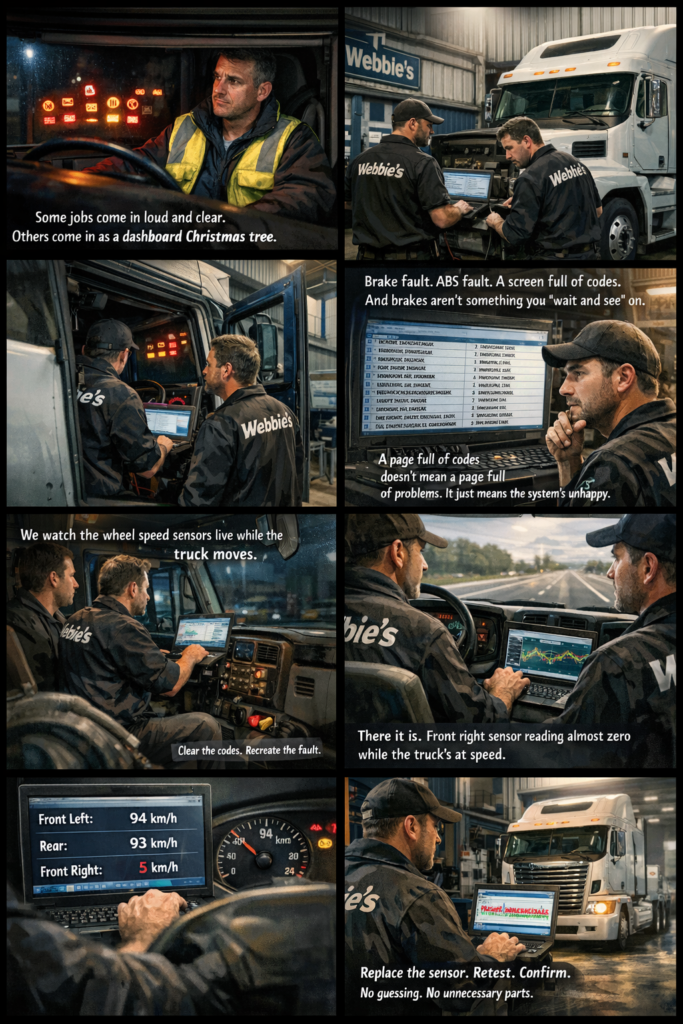
Some jobs come in loud and clear.
Others come in as a dashboard Christmas tree.
This fortnight we had an Argosy roll in with a brake fault—one of those ones that makes your stomach drop a bit because brakes aren’t something you “wait and see” on.
When we first brought the truck into the workshop, we plugged in and pulled the fault codes. There were heaps—multiple brake fault codes plus BS fault codes. That’s where it can get tricky, because a screen full of codes doesn’t always tell you the real cause. It just tells you what the system is unhappy about.
So we started the way we always do: clear the codes, then recreate the fault properly.
Next step was a test drive—controlled, safe, and with the laptop connected so we could watch live data as the truck moved. (No, nobody is driving with a laptop on their lap—we had one person driving and one person monitoring.)
On the drive we watched the wheel speed sensors in real time:
- Front left showed the correct speed we were travelling
- Rear sensors also matched the vehicle speed
- But the front right sensor was reading way off—showing we were barely moving while the truck was clearly at speed
That’s the smoking gun.
When one wheel speed sensor drops out or gives a false reading, it can trigger a chain reaction of brake and stability faults—because the truck’s system thinks one wheel is behaving differently to the others.
So the plan was simple and efficient:
✅ Back to the workshop
✅ Replace the front right speed sensor
✅ Another test drive to confirm everything reads correctly and the fault stays gone
This is exactly why we love proper diagnostics. Instead of guessing, throwing parts at it, or replacing more than you need—we pinpoint the issue and fix it cleanly, so our customers get back on the road with confidence.
If you’ve got brake warnings popping up, intermittent faults, or that “something isn’t right” feeling—don’t ignore it. Brake faults rarely fix themselves, but they can be caught early before they turn into downtime.