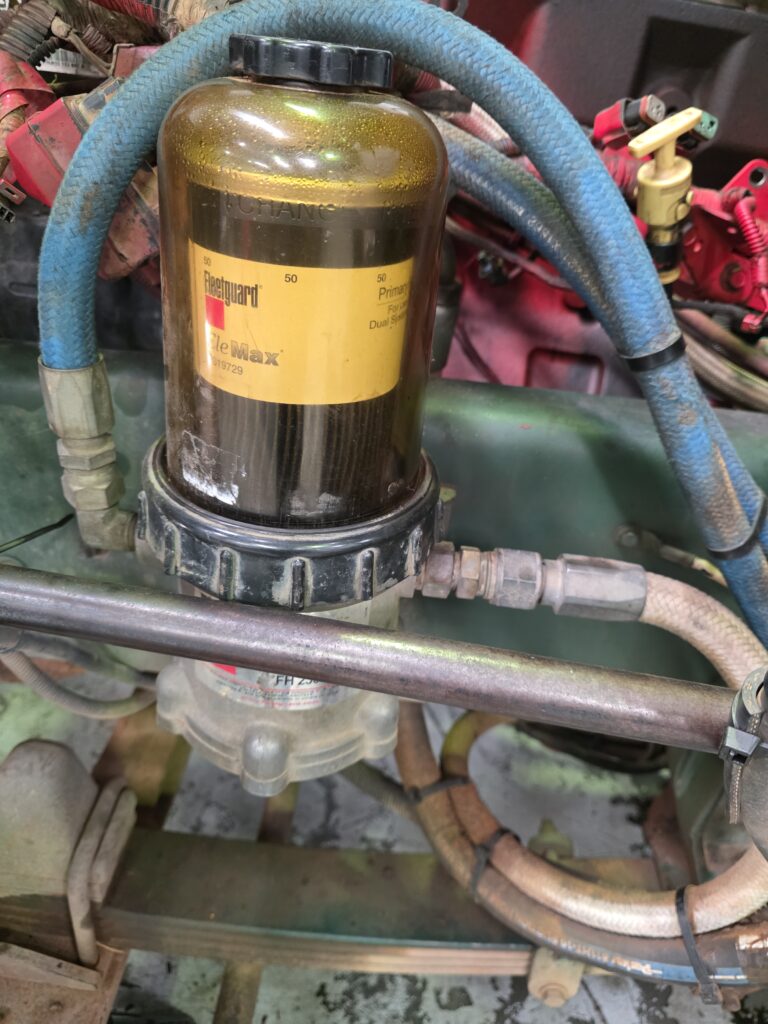
Why we change the fuel filter AND the water separator at every service.
Why We Change the Fuel Filter AND the Water Separator at Every Service
A forgotten water separator can throw a ‘water in fuel’ code and derate your truck. Here’s what each filter does and why we change both every service.
Two filters under the same housing — and one of them gets forgotten
Every truck that rolls through Webbie’s has a fuel filter and a water separator. Different parts. Different jobs. And one of them — the separator — is the one that quietly gets skipped on a service if no one’s paying attention. We see the result of that often enough that we decided it was worth a video and a blog.
Why that matters out on the Karratha run
Modern prime movers don’t shrug off a contaminated fuel system. There’s a sensor sitting in the bottom of the water separator, and the moment it sees what it shouldn’t, the dash throws a ‘water in fuel’ code. Most modern trucks then go straight into derate. Suddenly you’re down on power, the truck’s crawling, and you’re trying to work out why halfway between Perth and Karratha.
Won’t start is downtime. Down on power and a long way from home is worse — it’s lost loads, missed deadlines, and a tow bill at the end of it.
What each one actually does
Here’s the bit that doesn’t get explained properly often enough.
The fuel filter is doing two jobs at once. First, it catches the obvious stuff — rust from the tank, dirt that’s worked its way in, and built-up algae from a system that’s been sitting too long. Second, and this is the one that lets us catch problems early, it catches the brass shavings that show up when a fuel pump starts to wear. If we pull a filter and there’s brass in it, we know exactly what’s coming. We don’t wait for the pump to fail on the road.
The water separator does exactly what its name says. Water is heavier than fuel, so when the fuel runs through the separator’s filter housing, the water drops out and collects in the bowl at the bottom. That’s where the sensor lives. It’s also why this filter has to come off every service — not topped up, not ‘had a look at’, actually replaced.
If you want a feel for how seriously we treat the small parts of a service, have a read of Why Do We Punch a Hole in the Oil Filter? — same principle, different filter. Every step of the job matters because the road doesn’t care that you skipped one.
How we service it (and what we look at while we’re in there)
Every Webbie’s service does the fuel filter and the water separator filter at the same time. No skipping one to save five minutes — that five minutes is what costs you a day on the road.
While we’re in there, we’re checking two things:
- Water in the bowl. A bit is normal. A lot points to system contamination, and we chase it before it derates you.
- Brass in the filter. Brass shavings tell us the fuel pump is wearing. Caught at a service, it’s a planned fix. Caught on the highway, it’s a tow.
It’s the same logic we apply to the rest of the rig. If you’ve ever wondered why we lube head bolts before installing them, it’s the same idea — do the job properly the first time so the truck stays out on the road.
Don’t wait for the dash light
Here’s the takeaway: when you book a service with us, both filters get done. Every time. That’s the whole point.
If your truck’s due — or if you’ve already got a ‘water in fuel’ warning on the dash — book a service with us. We’ll have a look, change what needs changing, and get you back on the road before the derate costs you a day.